TC-GNN with Pytorch integration

Overview

TC-GNN (Running Sparse GNN on Dense Tensor Core on Ampere GPU)

  • Cite this project and paper.
@inproceedings{TC-GNN,
  title={TC-GNN: Accelerating Sparse Graph Neural Network Computation Via Dense Tensor Core on GPUs},
  author={Yuke Wang and Boyuan Feng and Yufei Ding},
  booktitle={Arxiv},
  year={2022}
}
  • Clone this project.
git clone [email protected]:YukeWang96/TCGNN-Pytorch.git
  • OS & Compiler:
  • Ubuntu 16.04+
  • gcc >= 7.5
  • cmake >= 3.14
  • CUDA >= 11.0 and nvcc >= 11.0

Files and Directories.

  • config.py: the configuration file for the shape of a TC block.
  • bench.py: the benchmark file for invoking main_tcgnn.py for various datasets and models.
  • main_tcgnn.py: the main entry for running TC-GNN.
  • count_TC_blocks.py: counting the total number of TC blocks without sparse-graph translation.
  • proc_prof.py: get the detailed GPU kernel metrics from the ncu csv output.
  • TCGNN_conv/: the directory for core TC-GNN implementations, including TCGNN_kernel.cu and TCGNN.cpp.

Environment Setup.

[Method-1] Install via Docker (Recommended).

  • Go to Docker/
  • Run ./build.sh
  • Run ./launch.sh

[Method-2] Install via Conda.

  • Install conda on system Toturial.
  • Create a conda environment:
conda create -n env_name python=3.6
  • Install Pytorch:
conda install pytorch torchvision torchaudio cudatoolkit=11.1 -c pytorch -c conda-forge

or using pip [Note that make sure the pip you use is the pip from current conda environment. You can check this by which pip]

pip install torch==1.8.0+cu111 torchvision==0.9.0+cu111 torchaudio==0.8.0 -f https://download.pytorch.org/whl/torch_stable.html
conda install -c dglteam dgl-cuda11.0
pip install torch requests tqdm
pip install torch-scatter -f https://pytorch-geometric.com/whl/torch-1.8.0+cu111.html
pip install torch-sparse -f https://pytorch-geometric.com/whl/torch-1.8.0+cu111.html
pip install torch-cluster -f https://pytorch-geometric.com/whl/torch-1.8.0+cu111.html
pip install torch-spline-conv -f https://pytorch-geometric.com/whl/torch-1.8.0+cu111.html
pip install torch-geometric

Install TC-GNN.

Go to TCGNN_conv/, then run

./build.sh

to install the TCGNN_conv modules with Pytorch binding. Note that this step is required for both Docker and Conda setup.

Download graph datasets.

Get the preprocessed datasets in .npy at here, then run

tar -zxvf tcgnn-ae-graphs.tar.gz

Running PyG baseline.

  • Go to pyg_baseline/ directory;
  • Pass the --model parameter in pyg_main.py with gcn and gin to profile the example GCN and GIN model, respectively;
  • ./0_bench.py| tee run_pyg.log to run the script and the report 10 epoch runtime for all evaluated datasets.
  • ./1_log2csv.py to convert the run_pyg.log to run_pyg.csv for ease of analysis.

Running DGL baseline.

  • Go to dgl_baseline/ directory
  • Pass the --model parameter in dgl_main.py with gcn and gin to profile the example GCN and GIN model, respectively;
  • ./0_bench.py| tee run_dgl.log to run the script and the report 10 epoch runtime for all evaluated datasets.
  • ./1_log2csv.py to convert the run_dgl.log to run_dgl.csv for ease of visualization.

Running TC-GNN.

  • Under the current project directory
  • ./0_bench.py| tee run_TCGNN.log to run the script and the report 10 epoch runtime for all evaluated datasets.
  • ./1_log2csv.py to convert the run_TCGNN.log to run_TCGNN.csv for ease of analysis.
You might also like...
🐸STT integration examples

🐸 STT 0.9.x Examples These are various examples on how to use or integrate 🐸 STT using our packages. It is a good way to just try out 🐸 STT before

Official repo for AutoInt: Automatic Integration for Fast Neural Volume Rendering in CVPR 2021

AutoInt: Automatic Integration for Fast Neural Volume Rendering CVPR 2021 Project Page | Video | Paper PyTorch implementation of automatic integration

An integration of several popular automatic augmentation methods, including OHL (Online Hyper-Parameter Learning for Auto-Augmentation Strategy) and AWS (Improving Auto Augment via Augmentation Wise Weight Sharing) by Sensetime Research.

An integration of several popular automatic augmentation methods, including OHL (Online Hyper-Parameter Learning for Auto-Augmentation Strategy) and AWS (Improving Auto Augment via Augmentation Wise Weight Sharing) by Sensetime Research.

Dahua Camera and Doorbell Home Assistant Integration

Home Assistant Dahua Integration The Dahua Home Assistant integration allows you to integrate your Dahua cameras and doorbells in Home Assistant. It's

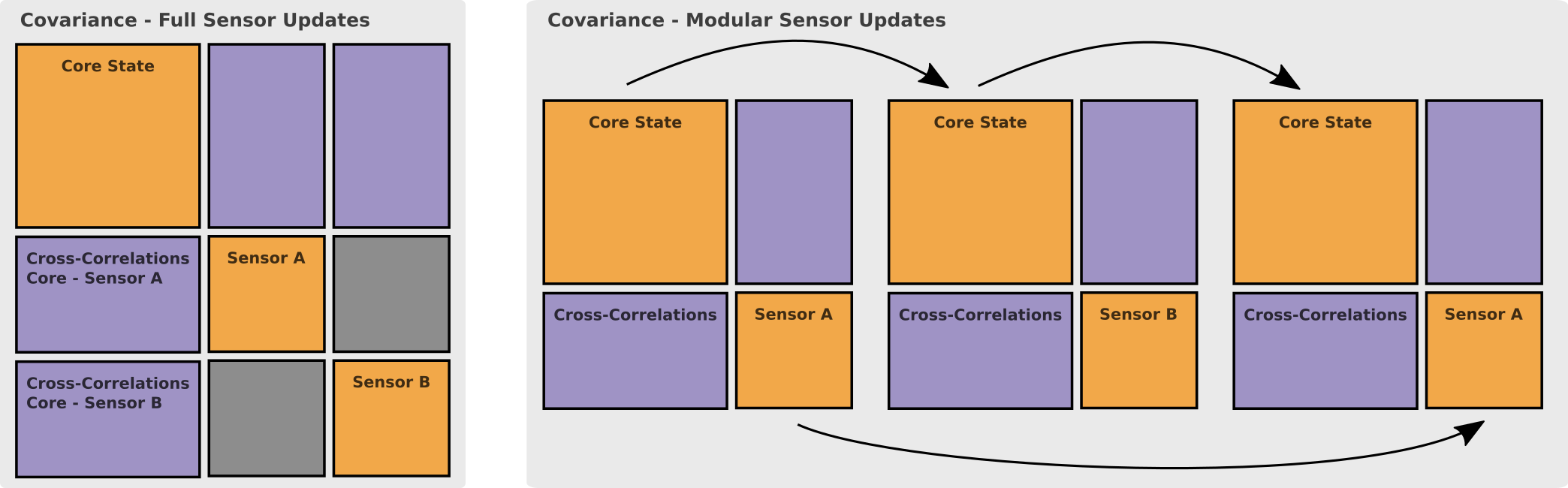
MaRS - a recursive filtering framework that allows for truly modular multi-sensor integration

The Modular and Robust State-Estimation Framework, or short, MaRS, is a recursive filtering framework that allows for truly modular multi-sensor integration

ROSITA: Enhancing Vision-and-Language Semantic Alignments via Cross- and Intra-modal Knowledge Integration

ROSITA News & Updates (24/08/2021) Release the demo to perform fine-grained semantic alignments using the pretrained ROSITA model. (15/08/2021) Releas

Wafer Fault Detection using MlOps Integration

Wafer Fault Detection using MlOps Integration This is an end to end machine learning project with MlOps integration for predicting the quality of wafe

Official code for On Path Integration of Grid Cells: Group Representation and Isotropic Scaling (NeurIPS 2021)

On Path Integration of Grid Cells: Group Representation and Isotropic Scaling This repo contains the official implementation for the paper On Path Int

Comments
  • Any docs about this project?

    Any docs about this project?

    Hi I came across this project and found the implementation is quite interesting. Is there any docs/paper that detail this project? Or you have any plan to release these kinds of information in the future?

    Thanks

    opened by mmmeee1111 1
Releases(v0.2)
Owner
YUKE WANG
https://wang-yuke.com
YUKE WANG
Pure python implementations of popular ML algorithms.

Minimal ML algorithms This repo includes minimal implementations of popular ML algorithms using pure python and numpy. The purpose of these notebooks

Alexis Gidiotis 3 Jan 10, 2022
Official pytorch implementation of the AAAI 2021 paper Semantic Grouping Network for Video Captioning

Semantic Grouping Network for Video Captioning Hobin Ryu, Sunghun Kang, Haeyong Kang, and Chang D. Yoo. AAAI 2021. [arxiv] Environment Ubuntu 16.04 CU

Hobin Ryu 43 Nov 25, 2022
Code and data for the paper "Hearing What You Cannot See"

Hearing What You Cannot See: Acoustic Vehicle Detection Around Corners Public repository of the paper "Hearing What You Cannot See: Acoustic Vehicle D

TU Delft Intelligent Vehicles 26 Jul 13, 2022
Recurrent Neural Network Tutorial, Part 2 - Implementing a RNN in Python and Theano

Please read the blog post that goes with this code! Jupyter Notebook Setup System Requirements: Python, pip (Optional) virtualenv To start the Jupyter

Denny Britz 863 Dec 15, 2022
A developer interface for creating Chat AIs for the Chai app.

ChaiPy A developer interface for creating Chat AIs for the Chai app. Usage Local development A quick start guide is available here, with a minimal exa

Chai 28 Dec 28, 2022
2021 CCF BDCI 全国信息检索挑战杯(CCIR-Cup)智能人机交互自然语言理解赛道第二名参赛解决方案

2021 CCF BDCI 全国信息检索挑战杯(CCIR-Cup) 智能人机交互自然语言理解赛道第二名解决方案 比赛网址: CCIR-Cup-智能人机交互自然语言理解 1.依赖环境: python==3.8 torch==1.7.1+cu110 numpy==1.19.2 transformers=

JinXiang 22 Oct 29, 2022
(Personalized) Page-Rank computation using PyTorch

torch-ppr This package allows calculating page-rank and personalized page-rank via power iteration with PyTorch, which also supports calculation on GP

Max Berrendorf 69 Dec 03, 2022
Python Implementation of Chess Playing AI with variable difficulty

Chess AI with variable difficulty level implemented using the MiniMax AB-Pruning Algorithm

Ali Imran 7 Feb 20, 2022
Multi-Scale Aligned Distillation for Low-Resolution Detection (CVPR2021)

MSAD Multi-Scale Aligned Distillation for Low-Resolution Detection Lu Qi*, Jason Kuen*, Jiuxiang Gu, Zhe Lin, Yi Wang, Yukang Chen, Yanwei Li, Jiaya J

Jia Research Lab 115 Dec 23, 2022
Based on Yolo's low-power, ultra-lightweight universal target detection algorithm, the parameter is only 250k, and the speed of the smart phone mobile terminal can reach ~300fps+

Based on Yolo's low-power, ultra-lightweight universal target detection algorithm, the parameter is only 250k, and the speed of the smart phone mobile terminal can reach ~300fps+

567 Dec 26, 2022
PyTorch implementation for Stochastic Fine-grained Labeling of Multi-state Sign Glosses for Continuous Sign Language Recognition.

Stochastic CSLR This is the PyTorch implementation for the ECCV 2020 paper: Stochastic Fine-grained Labeling of Multi-state Sign Glosses for Continuou

Zhe Niu 28 Dec 19, 2022
A High-Level Fusion Scheme for Circular Quantities published at the 20th International Conference on Advanced Robotics

Monte Carlo Simulation to the Paper A High-Level Fusion Scheme for Circular Quantities published at the 20th International Conference on Advanced Robotics

Sören Kohnert 0 Dec 06, 2021
PyTorch code for the paper: FeatMatch: Feature-Based Augmentation for Semi-Supervised Learning

FeatMatch: Feature-Based Augmentation for Semi-Supervised Learning This is the PyTorch implementation of our paper: FeatMatch: Feature-Based Augmentat

43 Nov 19, 2022
Project of 'TBEFN: A Two-branch Exposure-fusion Network for Low-light Image Enhancement '

TBEFN: A Two-branch Exposure-fusion Network for Low-light Image Enhancement Codes for TMM20 paper "TBEFN: A Two-branch Exposure-fusion Network for Low

KUN LU 31 Nov 06, 2022
Implementation of the Point Transformer layer, in Pytorch

Point Transformer - Pytorch Implementation of the Point Transformer self-attention layer, in Pytorch. The simple circuit above seemed to have allowed

Phil Wang 501 Jan 03, 2023
Code for the paper "Zero-shot Natural Language Video Localization" (ICCV2021, Oral).

Zero-shot Natural Language Video Localization (ZSNLVL) by Pseudo-Supervised Video Localization (PSVL) This repository is for Zero-shot Natural Languag

Computer Vision Lab. @ GIST 37 Dec 27, 2022
PSGAN running with ncnn⚡妆容迁移/仿妆⚡Imitation Makeup/Makeup Transfer⚡

PSGAN running with ncnn⚡妆容迁移/仿妆⚡Imitation Makeup/Makeup Transfer⚡

WuJinxuan 144 Dec 26, 2022
The pyrelational package offers a flexible workflow to enable active learning with as little change to the models and datasets as possible

pyrelational is a python active learning library developed by Relation Therapeutics for rapidly implementing active learning pipelines from data management, model development (and Bayesian approximat

Relation Therapeutics 95 Dec 27, 2022
functorch is a prototype of JAX-like composable function transforms for PyTorch.

functorch is a prototype of JAX-like composable function transforms for PyTorch.

Facebook Research 1.2k Jan 09, 2023
source code and pre-trained/fine-tuned checkpoint for NAACL 2021 paper LightningDOT

LightningDOT: Pre-training Visual-Semantic Embeddings for Real-Time Image-Text Retrieval This repository contains source code and pre-trained/fine-tun

Siqi 65 Dec 26, 2022